


The UAE’s event leadership brings global attention, and a growing carbon challenge.
The UAE secured
437 international events in 2024 alone, anchoring its status as a global business hub.
Globally, in-person events emit up to 1,000 kg CO₂e per attendee, far exceeding per capita climate targets.
The UAE’s event management market now exceeds $14 bn, and is growing at 11% annually.
These events are expected to attract over 210,000 delegates, with most emissions driven by travel, accommodation, and catering.
Without standardized emissions tracking, the sector risks undermining national decarbonization goals, making data-led interventions essential.
Realizing the need, DCT Abu Dhabi partnered with AGS to deliver a full-spectrum emissions assessment at one of their flagship summits, creating a data-first blueprint for replicable, net-zero-aligned events in the UAE.
The Process
AGS delivered a full-spectrum GHG emissions assessment of the Retrofit Summit, combining international standards with localised expertise to give DCT Abu Dhabi its first complete, data-led emissions baseline for event planning.
AGS designed a tailored data model aligned with the GHG Protocol, ISO 14067, and the Net Zero Carbon Events Roadmap, mapping emissions across five major categories: location, attendee mobility, purchases and materials, catering, and logistics.
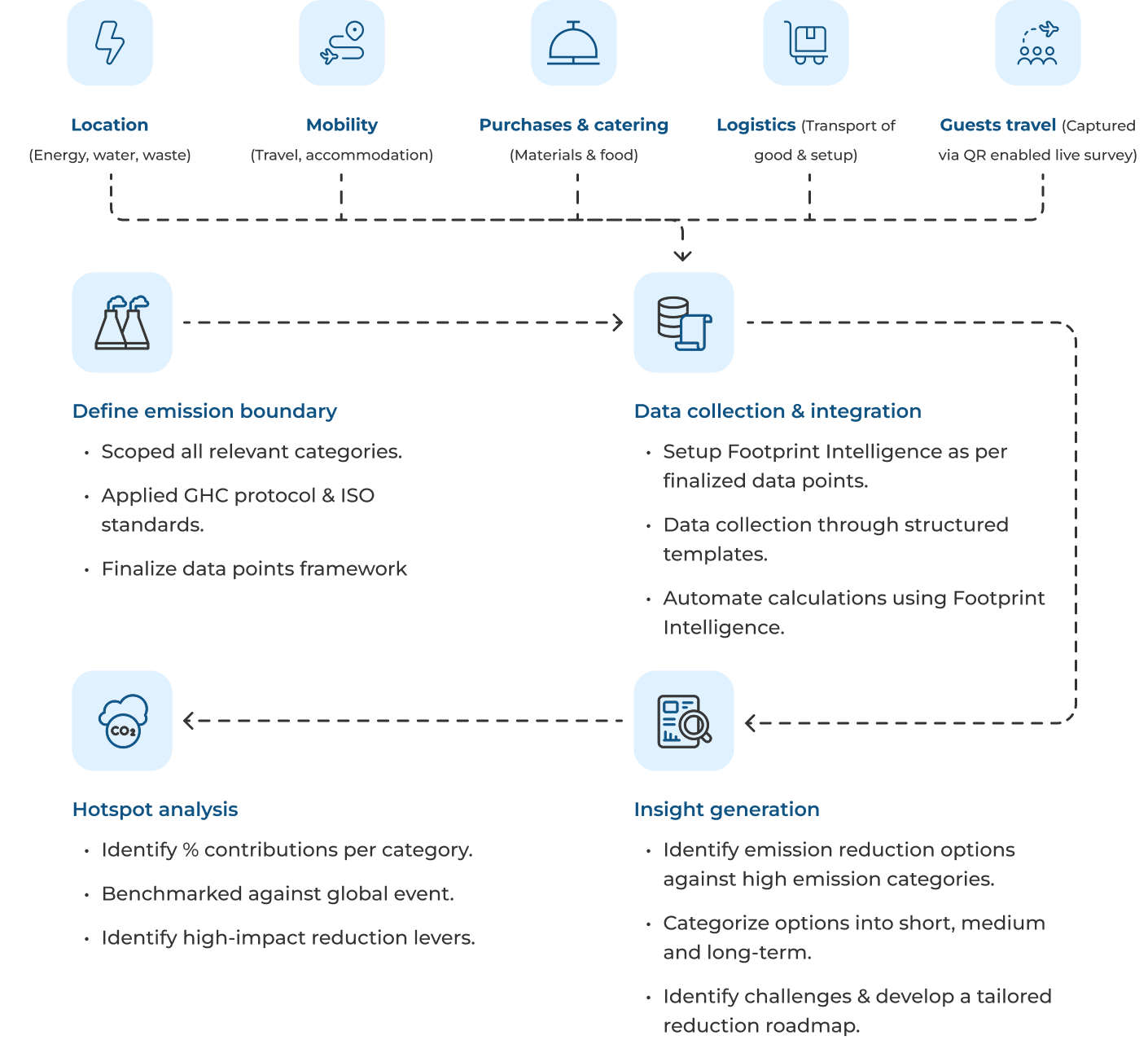
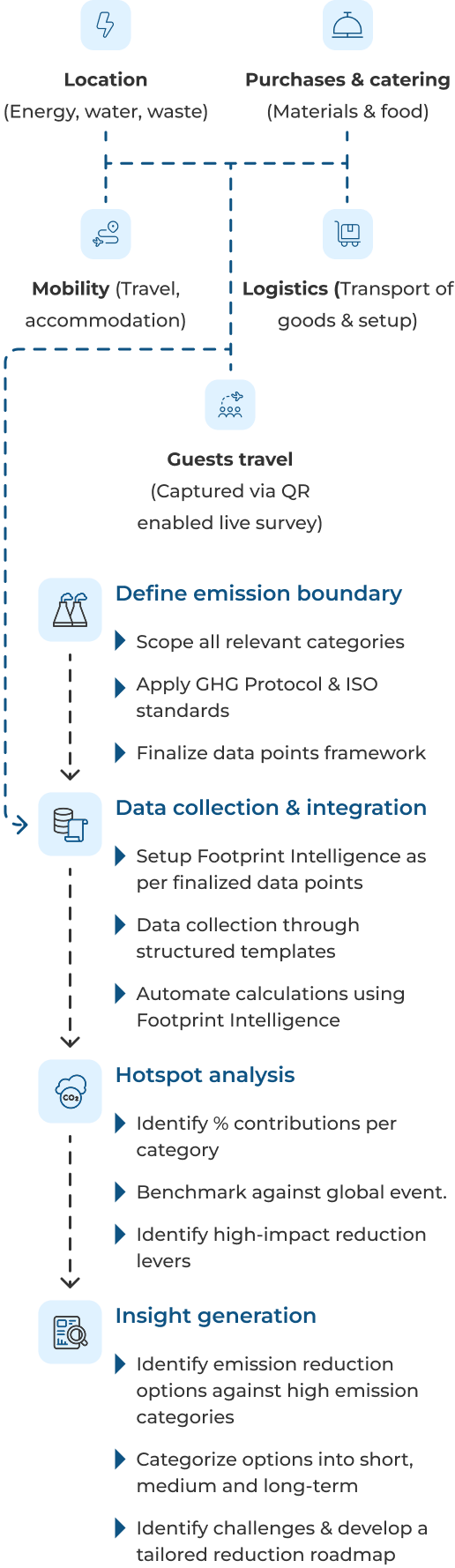
The emissions assessment was streamlined using Footprint Intelligence, our exclusively offered digital platform that enabled automated data processing and AI-assisted data collection. Its intuitive dashboards provided real-time progress tracking, improved accuracy, and ensured full transparency throughout the process.


Direct coordination with venue, catering, and vendor teams to collect primary data.
Application of UAE-specific emission factors and QA/QC protocols via Footprint Intelligence, our digital platform partner
Deployment of QR-enabled travel survey for live guest inputs.
The Outcome
Emissions Breakdown
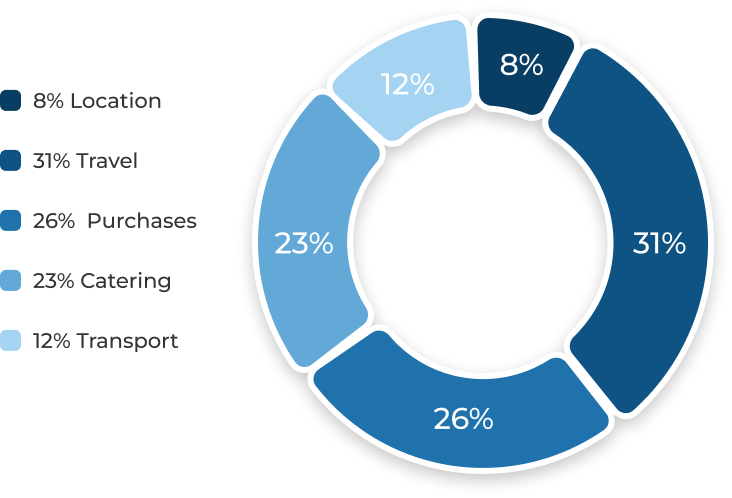
Emmission breakdown by Scope
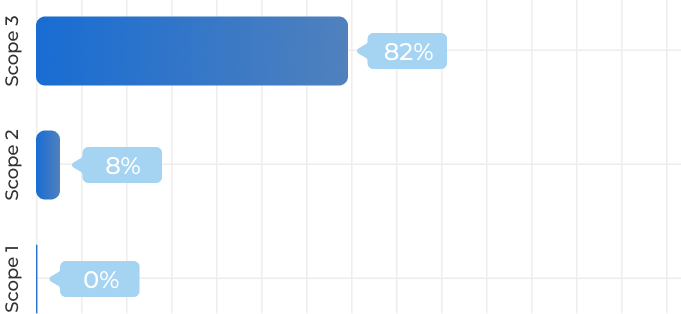
Almost the entire footprint fell under Scope 3, underscoring the importance of external engagement and procurement planning in reducing event-related emissions.
The Impact
DCT is now better positioned to scale this model across its event portfolio—ensuring that emissions reduction becomes standard practice, not a one-off effort.